Esports & Video Games
HOW DO ESPORTS BETTORS COMPARE TO TRADITIONAL SPORTS PUNTERS?
These days, it seems like every online sportsbook and casino operator is waking up to the sheer potential of the esports betting market. Why then, are even the most well-resourced traditional operators finding it so hard to take market share from the smaller, but more specialised esports operators?
To find out we talked with Paul Brel, Head of Communications at Livestream, the company operating dedicated esports bookmaker LOOT.BET.
What is the most noticeable difference between esports bettors and traditional sports punters?
The most obvious difference is definitely age. The vast majority of esports bettors are currently aged 18-25, whereas the typical traditional online sports bettor is more likely to be in the 30-35 year age range. This means we’re largely dealing with generations Z and Y-Z for esports, and generations X-Y and Y in for traditional sports betting. Of course, there are plenty of exceptions to this rule – it’s just an overall trend.
By the way, I should note that, when talking about esports bettors, we’re not just basing things on research, but also the fact that many of us here at LOOT.BET are passionate esports bettors ourselves. I guess we should really refer to esports bettors as ‘we’ during our conversation.
How does this age difference translate into other areas – for example lifestyles and occupations of esports bettors compared to traditional sports punters?
Because of the age trends, it’s no surprise the average esports bettor tends to be either a student, which is especially true for Eastern Europe, CIS and Southeast Asia, or a young professional which is more typical for Western Europe. Meanwhile, we’ve found the occupations of traditional online sports bettors cover a wider field, ranging from professionals and mid-level managers to manual labourers or service workers. Also, esports bettors tend to have a higher level of education. Again, this is just a broad trend, and of course there are many exceptions to this.
Another consequence of the age difference is that esports bettors, being younger and at earlier career stages, tend to be earning less than older traditional sports punters. This could explain why the average bet size in esports is smaller, and esports bettors are keener to take advantage of bonuses and promotions. However, again, due to his or her education and profession, an esports bettor’s income is likely to exceed that of a traditional sports bettor in the future, as his or her career matures.
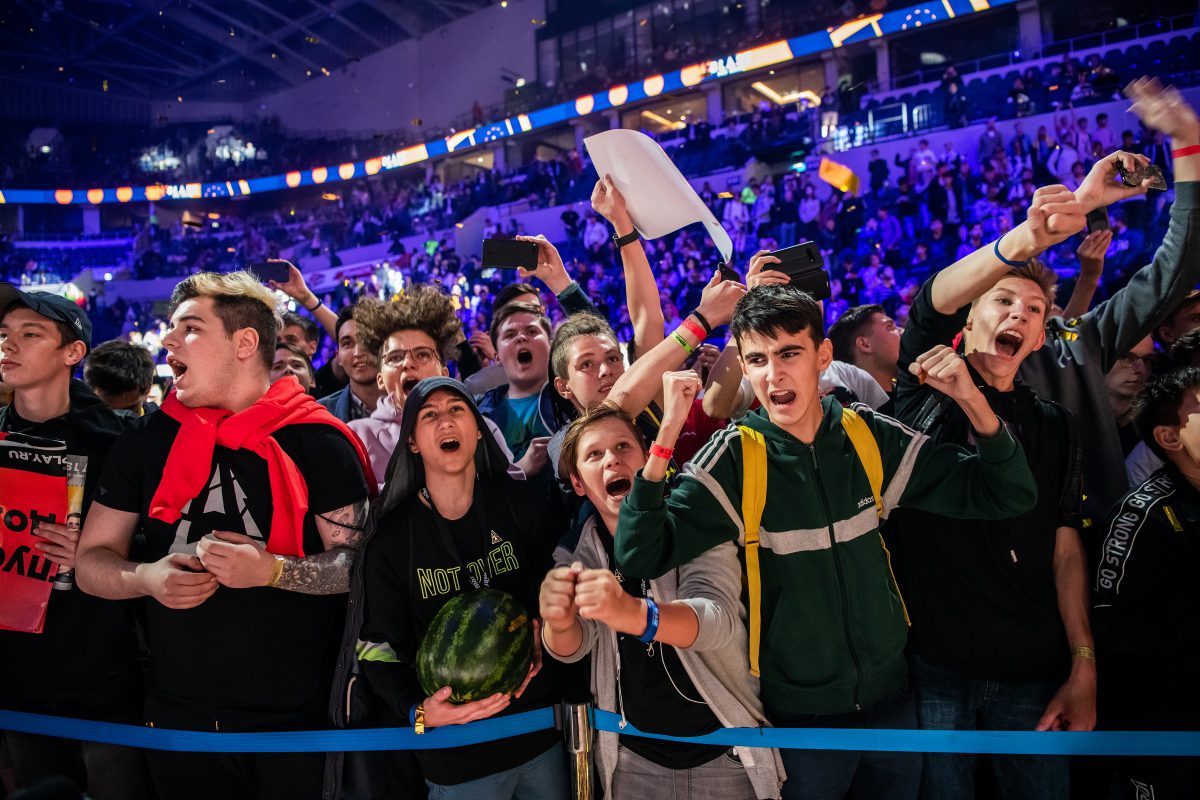
Image courtesy of Livestream
So, is it safe to assume this also means the average esports bettor is more tech savvy and switched on to trends than the average sports bettor?
We believe so. The average esports bettor is unmarried and has no kids, while the average sports bettor is likely to be married and have children. It’s probably safe to extrapolate that the average esports bettor has more time for keeping up with the latest tech and trends.
Also, it should be remembered that, given the younger age, esports bettors like us have grown up in a much more digital era than most traditional sports bettors. As a part of generations Z and Y-Z, we’ve never known life without broadband internet, smartphones and multiplayer gaming. Technology is an integral part of our lives and permeates every aspect of our lifestyles.
This isn’t to say that sports bettors aren’t using technology – it’s just indicating there’s a different relationship to it. Sports bettors are much more likely to use a mix of desktop and mobile devices than esports bettors.
What does this mean for gambling advertising?
Esports bettors are, on average, much less susceptible to standard advertising approaches and methods. We have very strong ‘banner blindness’, and are normally using adblock programs anyway. This contrasts very much with traditional online sports bettors, who are more likely to be receptive to normal advertising.
When it comes to more traditional marketing channels, like broadcast TV, radio and print media, they have basically zero effect on esports bettors – mainly because esports bettors are very unlikely to even be exposed to them. In contrast, the most effective advertising formats to reach esports bettors are native ones, such as online videos.
But, even then, for an advertisement to be effective, it’s absolutely crucial to speak esports bettors’ language – as in using slang and memes. Also, if you want your advertising to be effective on us, it has to be truly creative, sincere and unobtrusive, and compatible with our ‘clip thinking’.
Is it fair to suggest that esports bettors actually have a fundamentally different way of thinking about gambling as a whole?
Absolutely. It seems that generations Z or Y-Z, are more self-confident and like to emphasise reliance on knowledge and skills rather than luck. Like modern youth in general, esports bettors have very little interest in traditional gambling compared to older generations.
Illustrating this, our research showed that only 3% of esports bettors gamble at online casinos regularly, and just 20% occasionally. In fact, 77% said they never even considered this kind of gambling.
Going further, can we conclude that esports bettors are driven by different motives than traditional sports bettors?
To a large extent, yes. Though both esports and sports bettors are primarily shown to bet for fun, and the buzz of emotions it delivers, there is clear evidence that esports bettors are less concerned about viewing betting as a source of profit. This, coupled with the younger average age, explains why there are so many fewer professional and arbitrage bettors in esports.
Looking more closely, it’s striking that the vast majority of esports bettors are active players in the games they bet on – something that, to my mind, can’t be said for traditional sports bettors. Obviously, this means esports bettors know more about what they are betting on, and are less likely to be betting on an unfamiliar discipline guided only by statistics and news.
As a rule, we can say that esports bettors tend to be more immersed in esports than sports bettors are in sports. In addition to most esports bettors actually playing the games they bet on, this also manifests itself in following industry news – our research shows 96% do so – and being heavily engaged in online and offline communities.
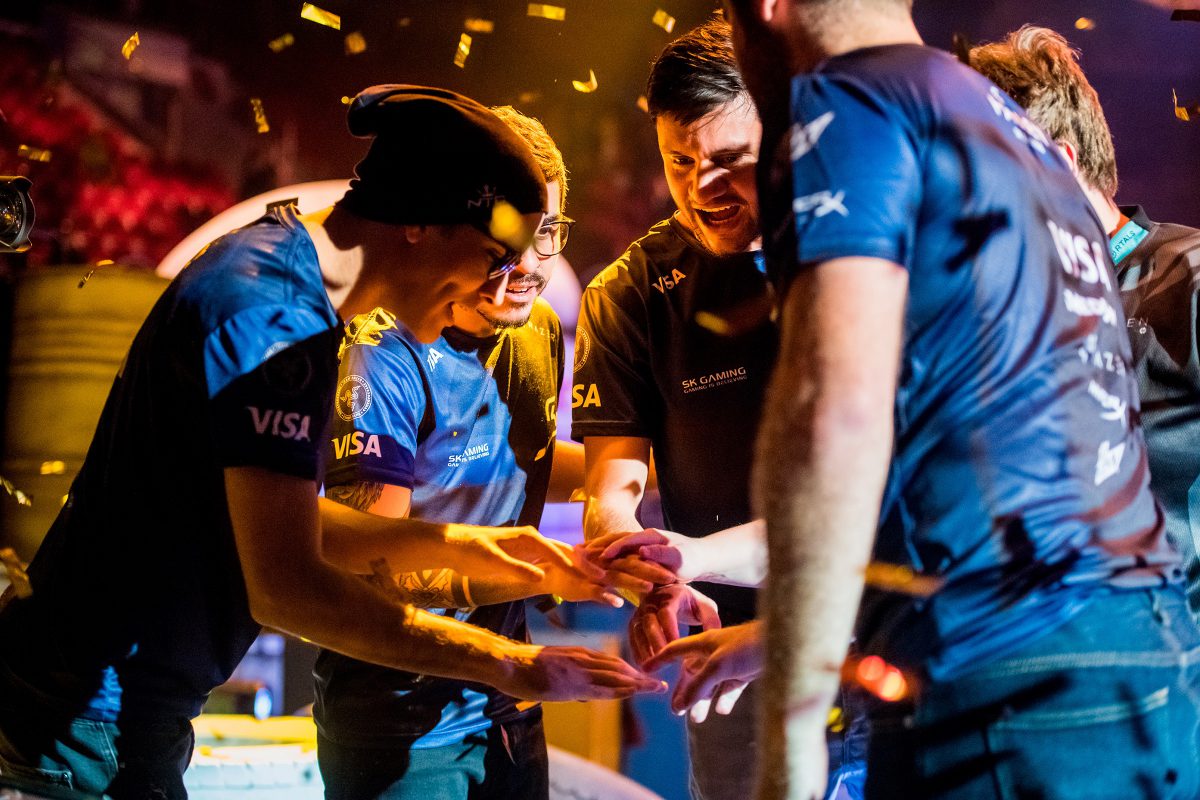
Image courtesy of Livestream
Maybe to illustrate this, you could give us a glimpse of a typical day in the life of an esports bettor, compared to a traditional sports bettor?
Sure, good idea! So, let’s say I’m an average esports bettor, and a typical day for me may look something like this:
- I check bets and match results as I wake-up – literally, I grab my phone as I’m still in bed.
- Eating breakfast and on the way to work or college, I’m catching up with the latest esports news and checking niche forums (like those on HLTV and Dotabuff), dedicated social media groups, betting channels on Telegram etc.
- After work or study, I’m placing new bets on upcoming events, playing video games, either esports or single player, and watching esports streams – all while chatting on my favourite forum or social media.
- To relax and wind down, I watch a couple of episodes on Netflix (probably science-fiction or fantasy), or trending videos from vloggers (e.g. Markiplier, PewDiePie, jacksepticeye etc.).
While a typical day for a traditional sports bettor would probably look more like this:
- Checks bets and match results as waking up.
- Reads sports and socio-political news at breakfast and on the way to work.
- After work, they come home, spend time with family, do household chores, and maybe head to the pub for drinks with friends.
- In the evening, if there’s a decent match on, they will likely place new bets, and watch it on TV or online. If there isn’t a big match, they will probably watch TV or a movie (more varied genres), or videos from vloggers covering DIY, travel, lifestyle etc.
As we can see, esports bettors are much more focused on their niche interests and more involved with the community, whereas traditional sports bettors have more domestic and offline social distractions, and are more passive in their consumption of information.
An issue we hear quite a lot about these days is diversity in esports, with things like GIRLGAMER highlighting the increasing involvement of women in esports. What does esports betting look like in terms of diversity?
Right now esports betting is still very much a male-dominated arena. LOOT.BET’s clients are split somewhere in the region of 94% male and 6% female. This gels with the traditional prevalence of males in the world of video gaming, and actually shows less diversity than the traditional sports betting world, where we estimate the percentage of female bettors to be significantly bigger at around 10-15%. However, the world of esports and esports betting is evolving much more rapidly than traditional sports betting, so we wouldn’t be surprised to see the balance shift dramatically in a relatively short space of time.
Does this different outlook and lifestyle affect attitudes towards other types of betting, say for example traditional land-based casinos and retail betting?
Very few esports bettors would ever consider gambling at land-based casinos or offline retail venues. Esports bettors like us very much inhabit an online world. We also very much value the clear, concise user interfaces that are normal to our high-tech world – with the comparatively high-friction land-based experience failing to appeal. The most savvy offline casino operators have already started looking into online esports betting, a good example is Malta-based Eden Leisure Group.
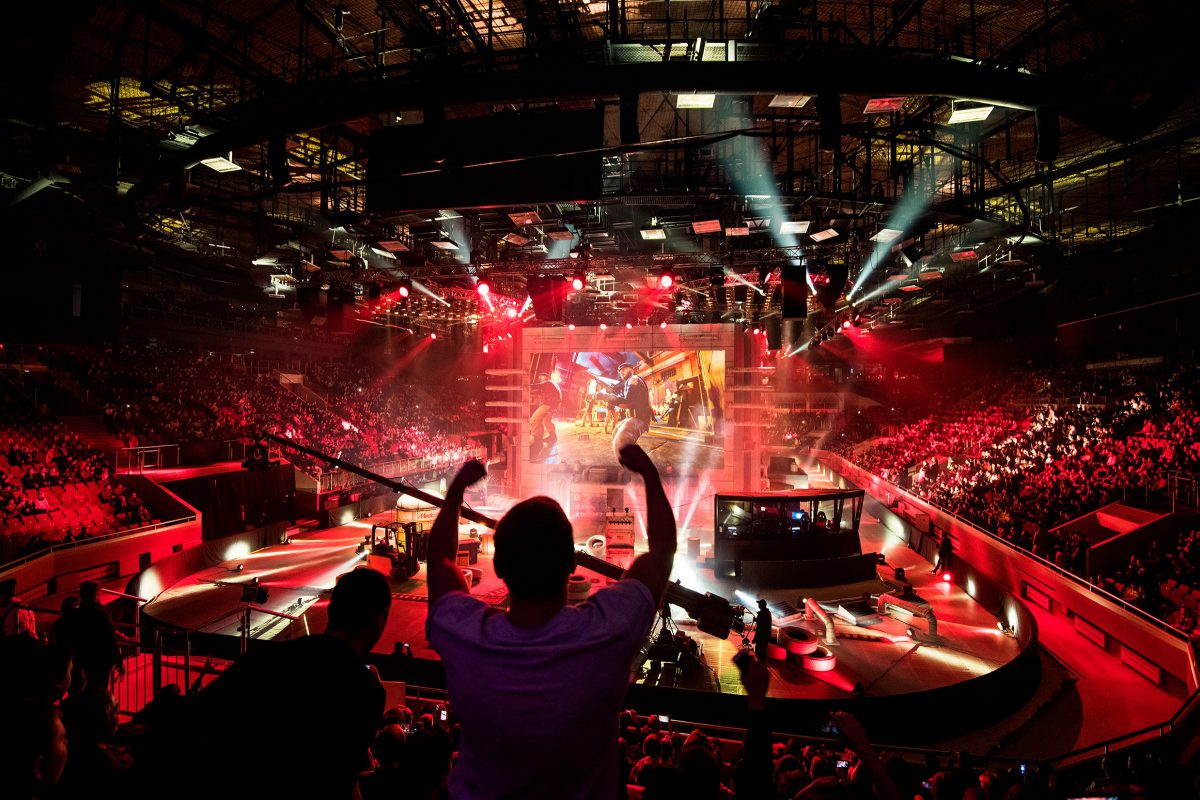
Image courtesy of Livestream
All-in-all, it looks like traditional online sports betting and casino operators have their work cut out to try and capture any meaningful share of the esports betting market, while specialist esports bookmakers, like LOOT.BET, have a massive advantage because of their nuanced understanding of the market. Is this a fair statement?
Basically, yes. Our research and own experience tells us that, for an esports bettor, esports is a whole lifestyle and way of thinking. We are playing esports titles, socialising (predominantly online) with other esports fans, and watching a lot of streams. Because esports titles are often games with entire worlds, ecospheres, and communities, in their own rights, the experience is utterly immersive, with esports fans and bettors alike very likely interested and involved in cosplay and purchasing merchandise and collectibles.
The relationship between video gaming and esports, and other entertainment is increasingly intertwined – especially in terms of music and movies. It all adds up to an all-encompassing lifestyle, in which generations Z and Y-Z take video games extremely seriously, and really don’t separate the real and virtual worlds.
This translates to esports bettors appreciating interactivity, gamification and technical advancement much more than traditional esports bettors do. It also encourages a much more active and emotional community, with esports bettors naturally chatting with other spectators directly on streams – again, in the ‘language’ of esports slang.
Despite traditional online sportsbooks and casinos trying to embrace some of these elements over the past few years, so far none of them have got anywhere close to really connecting with the esports betting market on a meaningful level. This is where specialist esports bookmakers, with their innate understanding of the video gaming and esports culture, are not just maintaining, but building their lead.
It’s a massive ‘thank you’ to Paul for taking his time to share his insights with us here at AYO.NEWS. We’re sure you’ll agree, it’s an interesting time for both esports and the betting industry in general right now.
Will any of the major traditional bookies manage to get their act together on esports, or are they too stuck in their ways to really grasp how different the world of esports is? Does the future belong to the nimbler, more nuanced specialist esports bookies, who’ve been fully immersed in esports culture since day one, or they all are destined to be bought out by betting hypermarkets before they get really big? Time will tell.
Don’t forget to check out LOOT.BET’s 2019 ratings, for a fascinating snapshot of the year, including the luckiest and most active esports betting countries.

Paul Brel, Head of Communications at Livestream, the company operating dedicated esports bookmaker LOOT.BET. Image courtesy of Livestream
AYO.NEWS says features the opinion of the author and does not necessarily reflect the views of Pentagon Digital Limited.
All original content featured on this site is © Pentagon Digital Limited, 2020.
