Connect with us

Esports & Video Games

MALTA GAMBLES EVERYTHING ON ‘LEAKY’ VACCINE, BANS MOST OF WORLD

Opinion & Featured

MALTA GAMBLES EVERYTHING ON ‘LEAKY’ VACCINE, BANS MOST OF WORLD

Published

on


Malta, the global iGaming hub, has taken the unprecedented step of banning most of the world, only allowing those with current Maltese, UK, or EU vaccine certificates to enter or leave the country. 

Despite an ongoing international advertising campaign promising tourists a warm welcome, and proclamations that the country is open for business, the tiny republic has become the first EU nation to ban all non-vaccinated people from either entering or leaving. Making matters worse, the Maltese authorities say they will only recognise vaccine certificates issued by Malta, the UK, or EU countries – effectively banning most of the world’s population. 

This obviously has major implications for the country’s gaming and tech industry, throwing the viability of planned expos and conferences into doubt, making business travel difficult, creating a headache for expat workers, and making the recently FATF-greylisted country even less attractive to foreign investment. 


Why has Malta taken this extreme step?

Although Malta itself has vaccinated around 80% of its own population, the government has taken the action following a spike in positive test results over the past week. This, of course, brings up a fairly obvious issue – but one that has so far been ignored by Maltese media and politicians. That is that everyone visiting the country had to produce negative COVID tests (except for Brits, who already had to produce a valid vaccination certificate). So, everyone entering had tested negative for COVID. Still, the current outbreak is being blamed firmly on those foreigners.

Of course, this strongly suggests that either the tests themselves are highly inaccurate, or that the vaccinated local population is actually spreading the virus (or a combination of the two). But, because very few of the vaccinated locals are developing symptoms, they are not getting tested – hence the majority of people getting tests are unvaccinated, possibly leading to the erroneous conclusion that it is the unvaccinated foreigners who are spreading the virus. 

The truth could be very different. Why? Because of a combination of several factors which are conveniently swept under the rug by politicians and health authorities who have gambled everything on the current vaccination campaign. And, let’s be clear here, this isn’t just a Maltese issue. It’s happening globally. But, because Malta is so small, and its policies are so extreme, it illustrates the ‘Catch-22’ situation we find ourselves in very nicely. 

But, before we look at exactly why the vaccination campaign is not likely to deliver the hoped for outcome, and is probably making a bad situation worse, let’s remind ourselves of something, and keep it in the back of our minds. That is that, by the time COVID-19 was brought to the world’s attention through the Wuhan crisis (which had more than a touch of the theatrical to it), the virus was already established around the world. This means that there was never a realistic opportunity to contain it. Indeed, the initial strain spread without detection precisely  because it was so innocuous. All things considered, had the Wuhan incident not struck fear into the world, it’s unlikely COVID would have ever prompted the lockdowns and hysterical clamour for vaccines that we’ve seen.


Why you need to understand what a leaky vaccine is

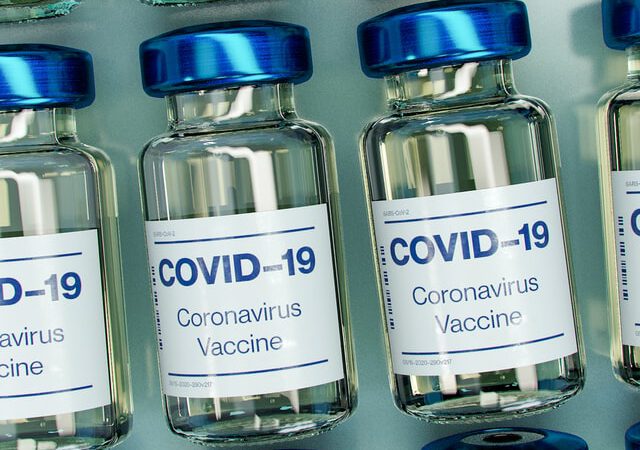
Which brings us on to the vaccine issue. Quite apart from the fact that none of the vaccines being used have completed long-term trials (by virtue of the fact they haven’t existed long enough), and some are using very controversial mRNA technology, there is a very big difference between these vaccines and those we have become accustomed to, like those for measles, mumps, rubella etc. 

Indeed, this is perhaps the most important thing to understand, the vaccines that were developed (of which there are over a dozen now in use globally), despite using several different technologies, including controversial mRNA tech, are all ‘leaky’ (also referred to as ‘imperfect’ or ‘non-sterilising’). This means they don’t stop people becoming infected or transmitting the virus, but rather reduce symptoms (and, some say, viral load and shedding) in the vaccinated. Furthermore, all the COVID vaccines in use are highly targeted, for example to the much discussed spike proteins. By contrast, ‘non-leaky’ or ‘perfect’ vaccines, like those we’ve all gotten used to taking for years as children, prevent both infection and transmission, and give our immune system exposure to the full makeup of the virus. 

On the one hand, developing leaky, highly targeted vaccines was very quick, enabling several pharmaceutical companies to roll out products in under a year – no mean achievement. But, on the other hand it means the vaccines we are now using might well be making the big picture much worse, and by deploying them we may have brought an illusion of short-term benefit at the expense of opening Pandora’s Box in the long-term. 
A warning from chickens

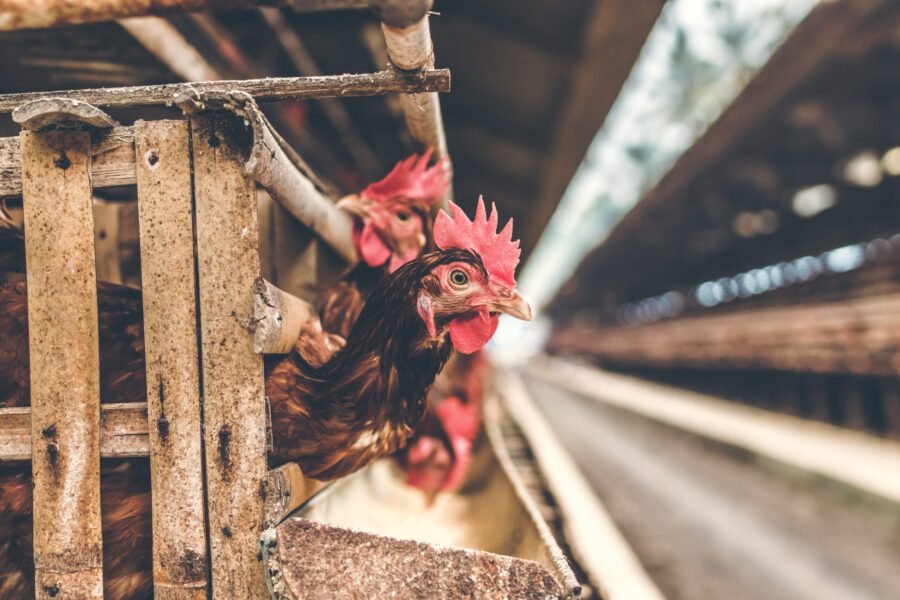
At this point, it’s probably helpful to consider what has happened with Marek’s disease in the poultry industry. Marek’s spreads rapidly and turns bird’s brains to mush, and decades ago was threatening to destroy the global poultry industry. So, they developed vaccines. Leaky vaccines. Most scientists assumed the vaccines would lessen the severity of the virus and be better than nothing, so they started a mass-vaccination campaign. 

At first, it seemed to work. Indeed, the vaccinated chickens survived for months longer, and seemed okay. However, something unexpected happened. Any unvaccinated birds exposed to vaccinated birds started dying extremely quickly. As it turns out, the vaccinated birds were found to be shedding up to 10,000x more virus than unvaccinated birds. 

You see, normally, as a virus evolves to become more brutal, it kills its host quicker, meaning it has less chance to spread, and usually dies out. It’s for this reason that Ebola, as terrifying as it is, has never gone on a world-wide rampage. But, the vaccinated chickens had essentially become asymptomatic carriers, in which the virus could continue to live, mutate, and shed.

So, the poultry industry unwittingly started off a process that would ensure Marek’s disease only got worse. Fortunately, for the industry, chickens tend to live on farms, in cages. In a state of permanent, total lockdown. So, it’s relatively easy to keep on top of a 100% rolling vaccination campaign, and keep ahead of the curve so-to-speak. Plus, chickens only need to live for a few months. 

However, humans aren’t chickens. Of course, if we completely locked down the entire world – every last man, woman, and child, and rolled out a total, continuous, rolling vaccination for the very latest strains, it might, theoretically at least, be possible to ‘pull a poultry industry’ and keep on top of COVID. But, in reality, this is far from possible. 

For, in a world where there are already a multitude of COVID variants, all evolving away in hugely infected populations, and where people need to work, socialise, and travel, any one single vaccinated population (say, for example, Malta), will inevitably end up seeing the introduction of a COVID variant which is so far removed from the one the population was vaccinated against, that the population will be akin to the unvaccinated chickens. 

So, by rolling out a mass vaccination campaign, in the middle of a hot global pandemic, using leaky vaccines, we may well have condemned ourselves to a never ending cycle of increasingly dramatic outbreaks of increasingly brutal strains – and all the resulting lockdowns and booster campaigns, that will inevitably fall ever further behind the curve. 

Want to find out more about the possible dangers of following a mass infection prevention and mass vaccination campaign with leaky vaccines, during the midst of a pandemic? Check out what Geert Vanden Bossche DVM, PhD (University of Ghent, University of Hohenheim, GSK Biologicals, Novartis Vaccines, Solvay Biologicals, Bill & Melinda Gates Foundation’s Global Health Discovery, Global Alliance for Vaccines & Immunization, German Center for Infection Research) has to say at his official website.

For more about how vaccination made Marek’s disease worse in chickens, check out this PBS News Hour article from 2015.
What happens next? Is there a solution?

So, here we are, in July 2021, and Malta has become the first European to ban anyone except those vaccinated in Malta, the UK, and EU, in a desperate attempt to halt the latest perceived outbreak. Will it work? Probably not – for while Malta is literally an island, it is still at the mercy of events elsewhere. Like the UK, Israel, and other countries that have enthusiastically embraced the vaccines, they may well buy some time, keeping symptoms down and hospital admissions lower for now, giving politicians and medical authorities some opportunities to pat themselves on their backs and claim they are winning. 

But, whereas early 2020, the world found itself widely infected with a relatively mild virus which the vast majority of people fully recovered from without medical assistance, in July 2021, we are in a much worse position, with multiple far more virulent variants, and billions of vaccinated people walking around as potential asymptomatic carriers, constantly spreading and mixing strains. And, at some point, with the already noted rapid waning of vaccine efficacy, and the constant rise of more transmissible and brutal variants, all the vaccinated will find themselves vulnerable once again. 

At that point, the jury is out on whether those who never got vaccinated will be in a better position than those who did get vaccinated. There are those who argue that, because the vaccines are so narrowly targeted, once they encounter a virus which is of sufficient difference, they will elicit an immune response, but it will be ‘sub-optimal.’ In a nutshell, your body will think it has the answer, and deploy its ‘acquired immunity’ (given by the vaccine), instead of/before its innate immunity (the generic, ‘gatekeeper’ immune system you have from birth). This means that those who either never had the vaccine, but have a healthy innate immune system, or those who were naturally infected by the virus and recovered, may well find themselves in a much better position to fight off future variants. 

Of course, there are those putting their faith in boosters for new variants, but anyone following the rise of new strains will realise this is fanciful thinking. The emergence of new variants is clearly accelerating (likely driven by the mass vaccination campaign itself), so any attempts to keep up with boosters will inevitably fall further and further behind. And, that’s not even taking into account the unworkable mess international travel would become if you had to ensure you had the correct boosters for the specific variants that were currently dominant in the place you were travelling to (something that will always be rapidly changing). 

So, looking back, it would probably have been far better never to have locked down or started a mass vaccination campaign at all. It would have been bad. People would have gotten sick and died. But, in absence of the extreme evolutionary pressure that such measures placed on the virus, it may well have naturally attenuated, and gradually faded into the background, becoming no more troublesome than a bad cold. 

While no one knows for sure if the COVID-19 virus was man-made and deliberately released, man-made and accidentally released, or an entirely natural virus that crossed the species barrier somehow, anyone could be forgiven for thinking this entire sequence of events was entirely predictable… and that some group, somewhere, might be sitting back and watching their plan unfold. 


Co-founder and Chief Editor of AYO.NEWS: Coming from an art and design background, Oliver has a passion for video games and esports, and has several years of experience working at the heart of the iGaming and sports betting industry in Malta.


Esports & Video Games

STATESPACE & KERNEL TAP NEUROSCIENCE TO ENHANCE GAMING PERFORMANCE

Published

on


Image credit: Statespace/Kernel

Statespace, the publisher of skill training and player development platform Aim Lab, has announced a partnership with neurotech developer Kernel. 

The partnership will see gamers training with Aim Lab software wear the Kernel Flow – a “revolutionary non-invasive brain interface” – to record neural activity, showing the relationship between gameplay and brain function. 

Statespace and Kernel say the collaboration will “launch a new era of professional gaming, brain wellness, and mental fitness, based on neuro quantification and lays the foundation of a new era of Digital Health.”

Early tests have shown that the skill sets needed to excel in competitive video games and esports, including visual perception, motor systems in the brain, and other cognitive skills including attention, working memory, navigation, planning, and decision making, can be quantified and tracked using Kernel Flow. 

Dr. Wayne Mackey, founder of Statespace, explained: “My focus with Aim Lab has always been the ways in which we can understand and quantify the relationship between brain function and in-game performance, and how that knowledge can be used for improvement.

“So our partnership with Kernel is a perfect fit. We’re looking forward to utilizing their cutting-edge hardware to expand our understanding of what human minds look like when playing games at a high level, and ultimately using that understanding to push the boundaries of what people think is even possible.” 

Kernel founder, Bryan Johnson, added: “What’s measured is improved, and Kernel is making brain measurement mainstream. Pairing Kernel Flow with Aim Lab opens a new frontier of performance enhancement, learning and mental optimization.” 

The partnership will be marked by an upcoming event during which Kernel Flow will be worn by pro gamers while playing Aim Lab. Details of this event will be revealed soon.


Continue Reading

Opinion & Featured

KNOWNORIGIN, ILLUMINO & BEAR NFT CO-HOST “TO THE MOON” MUSIC & ART FESTIVAL IN DECENTRALAND

Published

on

As part of the official Decentraland Art Week, NFT marketplace KnownOrigin, respected for its collaborations with NFT artists Sabet and Gary Cartlidge, has partnered with NFT curator Illumino and Metaverse & creative agency BEAR NFT to produce the TO THE MOON Music & Art Festival at 6:00pm UTC on Sunday July 11, 2021. 

The event will feature musical performances by noted electronic music acts including Ookay, SNBRN, Fred Thurst aka Dr. Fresch, Autograf, and Win and Woo, and will be broadcast live from Autograf’s studio in Los Angeles into Decentraland at the KnownOrigin Headquarters (located at 58, 94).

This will be the first ever live multi-artist performance and festival in Decentraland, a booming Metaverse and virtual hangout space for crypto and NFT enthusiasts and the global community.

In Decentraland, a Ready Player One-like virtual world, users can explore land owned by fellow users, featuring customized structures like mansions, art galleries and casinos, as well as experiential designs like space adventures and medieval dungeon mazes, all crafted from the minds of community members. Users can buy and sell land, avatar wearables and other paraphernalia all backed by the Ethereum blockchain.

Alongside the performances, the event will also be highlighted by a collection of NFTs created by BEAR NFT’s sister company Confidential Creative, made in conjunction with Illumino and featuring original music by the performing artists. 

The exclusive collection will be on display in a special wing of the virtual gallery within KnownOrigin Headquarters in Decentraland (located at 58, 94). Confidential Creative is known for its previous animated music videos and collaborations with musicians including Maroon 5, Journey, and Louis The Child.

Fans who attend the festival will have an opportunity to receive a POAP (proof of attendance protocol), or virtual token, that they can show off in their Decentraland profile. In addition, a selection of four exclusive wearables designed for the festival, including a bomber jacket and hat, will be available for attendees to purchase and use to accessorize their avatar characters in Decentraland.

“We are so thrilled to be producing the first ever live virtual festival in Decentraland with our friends at KnownOrigin and Illumino,” shared BEAR NFT co-founder Ryan Kieffer. “This is going to be a historic and fun event, and attendees are going to love the performances, NFT drops, and wearables we have planned to drop.”

For more information, follow the BEAR NFT artist page on KnownOrigin ( https://knownorigin.io/bearnft ) and follow BEAR NFT on instagram (@BEARNFT_) and twitter (@BEARNFT). The event will take place into Decentraland at the KnownOrigin Headquarters (located at 58, 94), which you can reach directly by clicking here.

Continue Reading

Opinion & Featured

BOSON PROTOCOL LAUNCHES $5 MILLION GRANT PROGRAM

Published

on


Image credit: Boson Protocol

Boson Protocol, the project using smart contracts to power real-world commerce, is launching a $5 million grant program to fast-track development of the decentralized commerce ecosystem. 

The grant program aims to accelerate the adoption of an open tokenized economy for commerce by attracting developers to build key elements of the infrastructure that will underpin the dCommerce ecosystem. 

In addition to  powering the future of exchange, the grant program will promote the growth of a thriving ecosystem of partners and developers working collaboratively to build the future of commerce.

Applications for the program are now being accepted via Boson’s website.

Commenting on the launch of the program, Justin Banon, Co-Founder of Boson Protocol, said: “Imagine a system of commerce in which users can own, govern and share in the value that the system itself creates, rather than seeing billions of dollars siphoned off to profit monopolies, as is the way with the current system. We firmly believe that there is a better way, and Boson Protocol is building the infrastructure to enable this more equitable form of commerce. For decentralized commerce to take off, a burgeoning ecosystem is essential, and we are proud to be building this ecosystem by launching this first-of-its-kind grant program, through which we hope to attract visionaries that share our goal of creating a more sustainable form of trade.” 

The core focus of this grant program is to enable the development of certain key aspects of protocol tooling and infrastructure, as well as the creation of the dApps that will fuel the decentralized commerce ecosystem. Grants will also be rewarded for community building efforts to nurture dCommerce adoption.  

Following Boson Protocol’s recent purchase of a $704,000 plot of virtual real estate in decentralized virtual social platform Decentraland, the project is also welcoming applications from developers who wish to build new retail experiences in Decentraland or alternative Metaverse locations, host events in Boson’s Decentraland pilot location focused on digital culture, web 3 art, and commerce, or create digital-to-physical product use cases for delivery within the Metaverse. Developer grants are also available for the creation of  analytics tools and governance modules for the dCommerce DAO. 

Through Commitment NFTs, Boson Protocol allows for future trade commitments to be tokenized, enabling enterprises, organisations, and customers to bridge the divide between digital decentralized technologies and the transfer and trade of physical goods. Boson Protocol aims to create a decentralized commerce ecosystem and enable the autonomous exchange of digital value for physical products and services, minimizing arbitration, cost, and trust. 

This is the latest in a slew of high-profile announcements for Boson, which, in addition to completing the largest ever virtual real estate deal with a $704,000 land purchase within Decentraland in order to develop a virtual mall,  also recently concluded a $25.8m public sale, having successfully raised $10 million USD in private investment rounds, and announced partnerships with companies including Ocean Protocol, Eidoo, Royale Finance, Gather Network, Bridge Mutual and Orion Protocol.


AYO.NEWS says:

In addition to the growth of on-chain online casinos and sportsbooks, the rapid growth of the decentralised commerce ecosystem, enabled by the rise of NFTs, is something that no one in the digital entertainment space, including iGaming, sports betting, video gaming, and esports, can ignore. Increasingly, we’re seeing NFTs harnessed to drive monetisation and engagement across these sectors, and we expect to see this trend accelerate over the coming years.


Continue Reading

Opinion & Featured

VCOIN LAUNCHES DEBIT CARD WITH UPHOLD: IMVU USERS EARN IN-GAME & SPEND IN REAL LIFE

Published

on

VCOIN, the first transferable digital currency designed for the metaverse, has teamed up with Uphold, a digital wallet and trading platform that makes cryptocurrencies and other assets easily accessible, to launch a debit card that allows users to earn real in-game value and spend it on real life transactions. 

The partnership will allow US-based IMVU users to withdraw their VCOIN earnings into their Uphold account and, for the first time, spend it via an Uphold Debit Card accepted at over 50 million retailers and ATMs, while earning 2% cashback on every transaction. 

This new offering expands VCOIN’s utility for holders and makes it even easier for earners of VCOIN to spend its value in real life. To obtain a card, users can visit therealvcoin.com/debit-card/. 

“The ability to earn VCOIN in the metaverse and quickly access that value in the real world has been behind the premise of VCOIN,” said Nancy Beaton, VP of Strategy at VCOIN. “Partnering with Uphold on a debit card makes this promise even more frictionless and accessible, creating a practical means by which metaverse users can earn digital currency that holds real world value to use in the real world.”   

To sign up for the Uphold debit card, users must have or create an Uphold account and then download the Uphold Card app. Once downloaded, users can connect their Uphold Account to the app and order a card. To receive a physical debit card, there is a one-time fee of $9.95 USD. Digital-only debit cards are free to order and use through the Uphold Card app. For every purchase both online and in store, card holders will earn 2% cash back into their Uphold Account. 

VCOIN holders can also quickly access VCOIN as soon as it is in their Uphold wallet, with no transfer wait times or hidden fees. 

VCOIN initially launched in IMVU, the leading friend discovery metaverse and social app, with a digital economy that facilitates 27 million transactions and 14 billion credits changing hands each month. IMVU received only the third crypto-centric no-action relief from the Staff of the U.S. Securities and Exchange Commission (SEC), enabling IMVU to sell VCOIN as a transferable non-security, thus unlocking its full potential to power peer-to-peer transactions and enable users to earn and convert VCOIN to real money for the real world.

“Uphold is dedicated to providing easier access and onramps to transformative digital currencies that will improve the virtual economy; and VCOIN is an exceptional digital currency that fits this bill,” said Uphold Chief Revenue Officer, Robin O’Connell. “We’re pleased to partner on this debit card so more users can spend their VCOIN at their favorite stores.” 

The card will first be available for U.S. residents with international availability coming soon. VCOIN also plans to launch its own branded debit card through Uphold soon. That card will provide additional incentives for holders and users of VCOIN.

Continue Reading

Opinion & Featured

UK’S FINANCIAL CONDUCT AUTHORITY FIRES WARNING SHOT AT BINANCE

Published

on


Photo by Executium on Unsplash

The UK’s Financial Conduct Authority (FCA) has ordered Binance, the world’s largest cryptocurrency exchange, not to conduct any regulated activity in the country, and issued a warning to consumers.

According to MarketWatch, in an email the FCA said “a significantly high number of crypto-asset businesses are not meeting the required standards” regarding anti-money laundering (AML) regulations, and that of the firms it had “assessed to date, over 90% have withdrawn applications following our intervention.”

Binance Group’s exact business structure has long been opaque, with the firm assumed to have been based in Malta for a while, and other reports suggesting it was operating out of the Seychelles. However, according to the BBC, the group is now based in the Cayman Islands. 

It does, however, have a UK registered subsidiary, Binance Markets Limited, and had been planning to launch a dedicated UK digital asset marketplace. Indeed, in August 2020, the company rolled out a major advertising campaign in London, in anticipation of the launch of its UK platform. Apparently, Binance has now withdrawn its FCA registration applications after failing to meet the required standards. 

UK-based customers are still able to use Binance, and Binance Markets Limited can still provide crypto-trading services to UK customers, but it looks unlikely it will be able to offer regulated services in the country for the foreseeable future.

Binance’s regulatory headaches are really starting to stack up around the world. In addition to the UK FCA’s warning, across the pond in the US, Binance Holdings has been probed by the Securities and Exchange Commission (SEC), regarding possible money laundering and tax offences, and the commission issued a warning to consumers in April. 

Meanwhile, last week Binance confirmed it was withdrawing from Canada, after the Ontario Securities Commission (OSC), warned the platform was not complying with the province’s regulations. And, on Friday, Binance received its second warning in three years from Japan’s Financial Services Agency (FSA), which has said the platform is operating in the country illegally. 

Binance has also been slammed by the Securities Commision of Malaysia (SC), and blacklisted by the Russian telecommunications regulator, Roskomnadzor.


AYO.NEWS says:

While the decentralised nature of crypto assets and business make them inherently hard to regulate, and Binance is unlikely to be too phased by these actions in the short-term, the compounding reputational damage is clearly mounting.


Continue Reading

Opinion & Featured

MALTA: IGAMING HUB JOINS MYANMAR, PANAMA & SYRIA ON FATF GREY LIST

Published

on

Malta, the international iGaming hub, has officially been grey listed by the Financial Action Task Force (FATF), labelling it as an untrustworthy jurisdiction. 

The country is now in the same category as countries like Burkina Faso, Cambodia, Myanmar, Nicaragua, Panama, Syria, Uganda, Yemen, and Zimbabwe, and is the first European Union member nation ever to make the list. 

Despite making significant progress over the past couple of years, and passing a recent Moneyval test, the country failed to convince the FATF that it could be trusted when it comes to tackling corruption and financial crime. 

Malta’s Prime Minister, Robert Abela, has said the FATF’s decision was “not deserved” and “unjust”, and opposition leader Bernard Grech deemed it a “national punishment.” However, Malta’s Finance Minister, Clyde Caruana, insisted the government would not be modifying its GDP growth targets. 

Although no one knows exactly how the FATF’s move will affect the Maltese economy, those in the critical iGaming industry, who have been finding it difficult to access even basic banking services for years now, will be bracing themselves for potentially severe issues. 

For, as many Malta-based businesses are only too aware, being associated with the country already raised eyebrows with many international banks and financial service providers, so this official greylisting could convince them to withdraw services completely. 

Clearly, Malta now faces a major reality check, with the FATF greylisting combining with several other issues. 

The value of its iGaming license, issued by the Malta Gaming Authority, has plummeted due to regulatory reforms in major gaming markets – most recently Germany. Meanwhile, its plans to become a blockchain and crypto hub (Blockchain Island) seem to have evaporated, as regulatory delays and confusion have caused companies to quietly drift away.

Taking a step back and looking at the bigger picture, the attractiveness of the island as a place to live and work has fallen through the floor thanks to rocketing living costs and environmental degradation, while its tourism industry, like those of other countries, has been devastated by the still ongoing COVID-19 crisis.

To those on the ground, it can seem like the majority of locals are blissfully unaware of the swelling problems threatening the country. New office towers, apartment buildings, and hotels are still being built and planned, politicians continue to talk of continuous economic growth, and the sun is shining. 

But, behind the scenes, many of those who helped turn Malta into a gaming hub will be making alternative plans for the future.


Continue Reading


Trending


Click to comment

Leave a Reply

Your email address will not be published. Required fields are marked *